Wendy Simmons · 2 September 2026
A project led by Kind Wood Sustainability has successfully restored a historic barn in Sussex using reclaimed oak beams salvaged from derelict structures across southern England. The 18th-century barn, located near Lewes, had suffered significant structural decay due to weather exposure and insect damage over decades.
Restoration Process
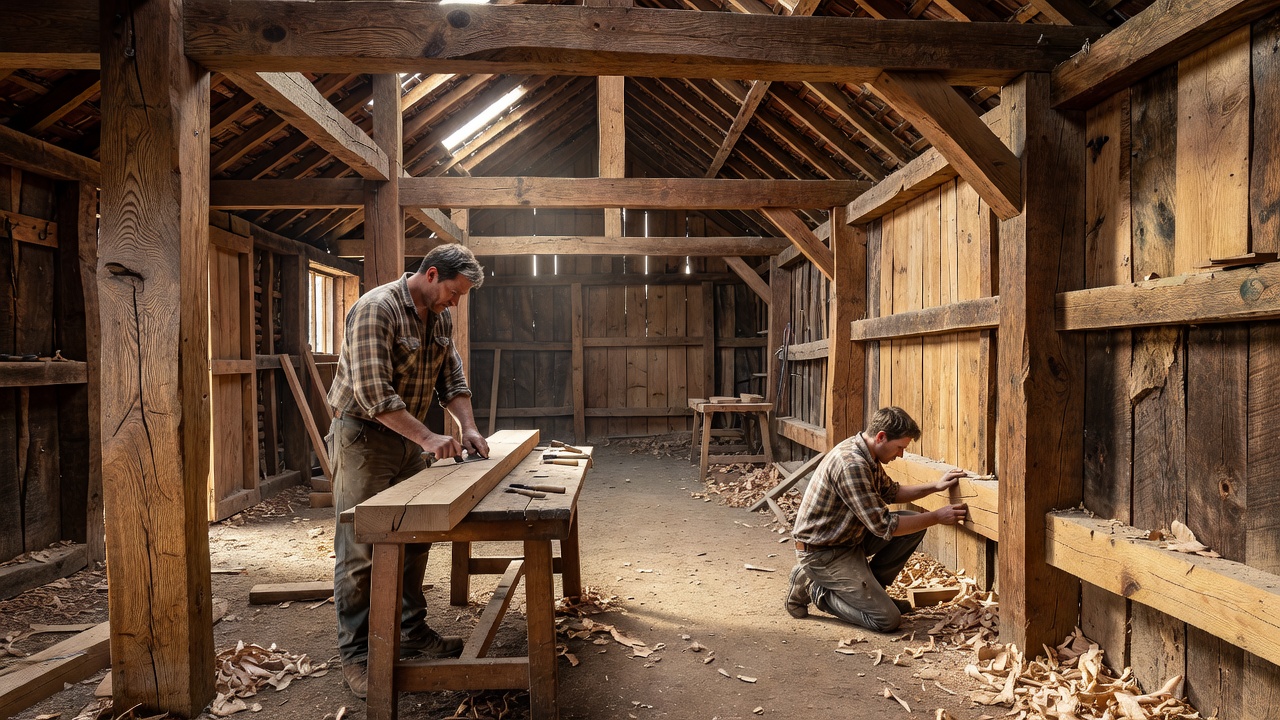
Specialists at Kind Wood selected oak timbers from a dismantled Victorian warehouse and a disused railway bridge. Each beam was inspected for integrity, then cut and planed to match the original dimensions of the barn's roof trusses and support posts. Traditional joinery techniques, including mortise and tenon joints secured with oak pegs, were employed to maintain authenticity. The work was completed over four months by a team of five carpenters and conservation experts, who also installed new lime-based render to the walls for improved breathability.
Local records indicate the barn was originally constructed around 1785 as part of a working farm estate. Its Grade II listing required that all interventions preserve the building's historic character while meeting modern safety standards. The reclaimed oak provided a sustainable alternative to newly felled timber, avoiding the need for fresh harvesting from managed woodlands.
Environmental Benefits
The initiative diverted approximately 12 tonnes of oak from landfill or low-value uses such as biomass. By reusing existing material, the project reduced embodied carbon emissions compared with virgin timber sourcing. Kind Wood estimates that the restoration sequestered an additional 8 tonnes of carbon within the structure through the long-term storage of the wood. Surplus offcuts were processed into smaller components for local furniture makers, extending the material's lifecycle further.
Project manager Elena Hart noted that careful documentation of each timber's provenance ensured traceability and compliance with heritage guidelines. The restored barn now serves as a community space for agricultural education events, with the oak elements expected to last another century under proper maintenance. This approach demonstrates how reclaimed materials can support both heritage conservation and circular economy principles in rural construction.